
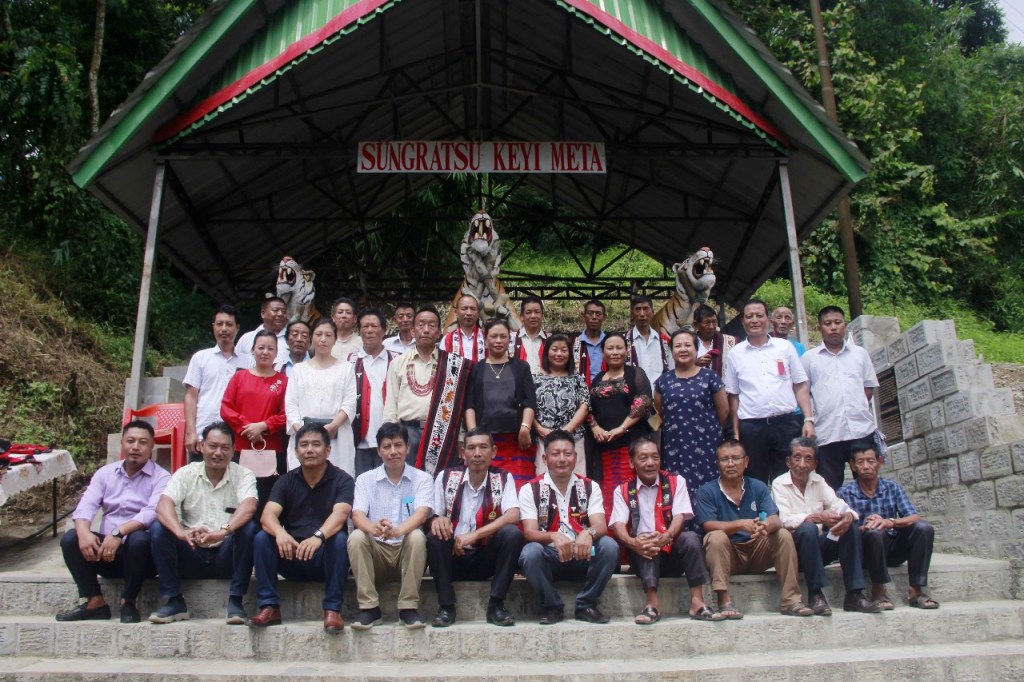
A new monument, “Süngratsü Keyi Meta — Platform for Slain Tigers,” was inaugurated on September 12 in Süngratsü village. The platform commemorates the village’s historical tradition of slaying tigers in retribution for attacks on their domestic animals. For the people of Süngratsü, killing tigers was a symbol of bravery, prestige, and masculinity.
The monument was inaugurated by Kiehungle, wife of the late Dr. Imtiwapang Aier, former Nagaland Legislative Assembly (NLA) Speaker and MLA, and dedicated by I. Kilen Longchar, Pastor of Süngratsü Baptist Arogo. Located near the village’s main gate, the site where slain tigers were once displayed, the monument honours the legacy of these hunts.
Süngratsü Village Council Chairman, M. Taka Longchar, recounted that while no villagers were ever killed by tigers, the animals frequently preyed on livestock, leading to regular hunts in retribution. After a successful tiger hunt, the villagers celebrated by triumphantly parading the tiger’s carcass and placing it on a platform beside the gate, where it was left to decay, symbolising strength and sending a clear warning to any threats.
The monument has been a long-held dream for the people of Süngratsü, although financial constraints delayed its construction. M. Taka Longchar credited the contributions of the late Dr. Imtiwapang Aier and his family for helping make the monument a reality.
Kiehungle, speaking at the event, expressed her gratitude for those involved in the project and highlighted her late husband’s commitment to the village’s development.
Wati Walling, convener of the Keyi Meta-Construction Committee, shared stories from the village’s history of tiger hunts, some of which have been lost over time. However, records exist from the 18th century until the practice was abandoned in 1972. Walling also announced the release of a book titled Süngratsü aser keyi otsü— Süngratsü and Tigers Stories, documenting tiger hunting accounts. One notable event from October 1970 recounts the killing of 12 tigers in a single hunt, while the sculptures in the newly inaugurated platform commemorate a hunt from October 17, 1972.
*****
 The Nokinketer